
Baklava is one of the most beloved desserts worldwide, known for its flaky layers, sweet syrup, and rich, nutty filling. However, a common question among dessert lovers is about the nuts inside: What’s the difference between pistachio and walnut baklava? In this guide, we’ll explore the flavors, textures, and overall experience of these two popular types, so you can decide which one is right for your next indulgence.
Understanding the differences between pistachio and walnut baklava helps you appreciate every bite and make the best choice for your taste. Let’s dive into the world of pistachio vs walnut baklava and see how the type of nut can change the dessert experience.
Pistachio vs Walnut Baklava: Flavor and Texture
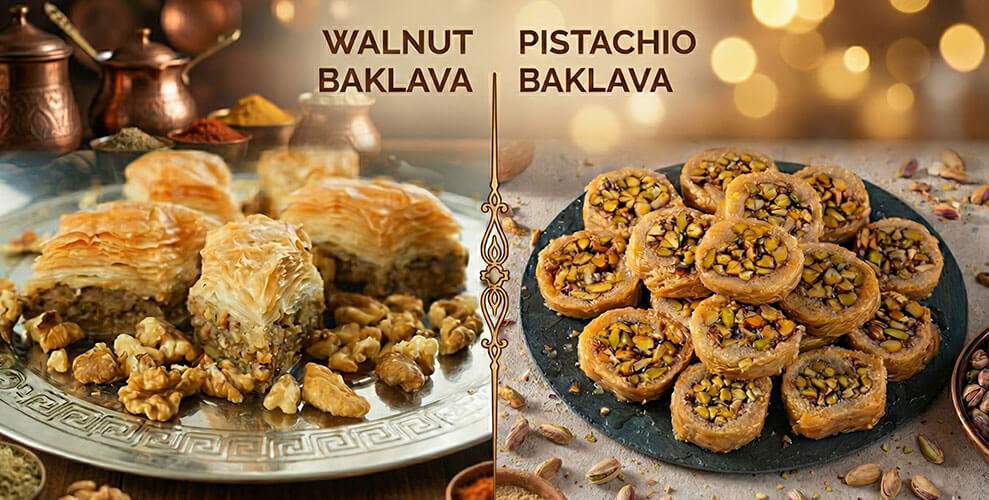
The most obvious difference between pistachio and walnut baklava lies in the baklava filling. Pistachios are known for their bright green color and slightly sweet, earthy flavor. They add a delicate crunch that complements the crisp layers of phyllo dough and the sweetness of the syrup. Many dessert lovers prefer pistachio baklava because of its vibrant appearance and subtle taste that doesn’t overpower the syrup. Pistachio baklava is often associated with premium or Turkish-style recipes, highlighting its luxurious nature.
Walnuts, on the other hand, offer a richer, more robust flavor. Walnut baklava has a slightly bitter undertone that balances the sweetness of the syrup and creates a hearty dessert experience. The texture is also slightly different; walnut pieces tend to be larger and add a denser, chewier feel compared to the lighter crunch of pistachios. For people who enjoy bold flavors, walnut baklava provides a satisfying depth that pairs perfectly with black tea or strong coffee. This contrast between the two nuts is why many baklava lovers compare pistachio vs walnut baklava before choosing what to order.
Nutty Notes: How the Nuts Affect Taste
Pistachio baklava, especially varieties like Turkish pistachio baklava, is prized for its premium quality and vibrant nutty aroma. The nuts themselves have a mild sweetness, which enhances the overall dessert without overpowering it. When baked correctly, the pistachios remain crunchy and fragrant, giving each bite a layered and satisfying texture. The subtle flavor allows the syrup and phyllo layers to shine, creating a balanced taste experience.
Walnut baklava, by contrast, offers an earthy richness that appeals to those who prefer a stronger, more pronounced nut taste. Walnuts are oilier and denser than pistachios, which contributes to a slightly softer, chewier bite. This texture is comforting and hearty, perfect for dessert lovers who enjoy bold, full-bodied flavors. The flavor profile of walnuts also pairs well with spices such as cinnamon or clove, which can be added to the syrup or nut mixture for a more aromatic experience.
Best Nuts for Baklava
Choosing the best nuts for baklava depends on the flavor profile you want. Pistachios are ideal for a sweeter, lighter dessert, often used in Turkish or Middle Eastern recipes to add color and subtle sweetness. They are visually appealing and provide a crisp bite that complements the syrup perfectly. In many premium bakeries, pistachio baklava is considered a specialty item and is often highlighted for its aesthetic appeal.
Walnuts, however, are great for those who enjoy a heartier dessert. They hold up well during baking, add depth to the flavor, and pair nicely with thicker syrup or spiced variations. Some baklava makers even mix pistachios and walnuts to create layered desserts that combine the best of both worlds. This allows customers to enjoy the delicate crunch of pistachios alongside the bold, earthy flavor of walnuts in a single bite, creating a truly unique dessert experience.
Appearance and Presentation
The type of nut used in baklava also affects its visual appeal. Pistachio baklava is often green-tinted from the chopped nuts and looks vibrant when served, making it perfect for celebrations or gift boxes. Walnut baklava tends to have a more golden-brown hue with earthy specks, giving it a rustic, comforting look. Presentation matters when serving baklava to guests, and the choice of nuts can enhance the overall experience.
Some baklava bakers use whole pistachios or decorative nut arrangements on top of each piece, making it visually stunning. Walnut baklava often emphasizes the natural, hearty appearance of the nut filling, which signals richness and depth. This visual distinction also helps customers quickly identify their preferred flavor when ordering from a bakery.
Serving Experience
The serving experience differs between pistachio and walnut baklava as well. Pistachio baklava tends to feel lighter on the palate, making it ideal for afternoon tea or as a delicate dessert after a meal. Walnut baklava, with its denser texture and robust flavor, is often enjoyed as a more indulgent treat or during festive occasions. The choice of nut influences not only taste but also how satisfying the dessert feels with each bite.
Pairing drinks is also a factor. Pistachio baklava pairs beautifully with mild teas, coffee, or sweet dessert wines, while walnut baklava complements stronger black teas or dark coffee. This subtle difference can enhance the overall enjoyment and make each type of baklava feel uniquely special.
Storage and Freshness Tips
Regardless of the nut type, baklava should be stored properly to maintain crispiness and flavor. Keep it in an airtight container at room temperature, away from humidity, to preserve the layers and the nutty filling. Avoid refrigeration unless necessary, as it can soften the pastry. By following these tips, you can enjoy your pistachio or walnut baklava at its freshest.
Final Thoughts: Pistachio vs Walnut Baklava
In conclusion, the main difference between pistachio and walnut baklava is the baklava filling itself. Pistachios provide a delicate, sweet, and crunchy experience, while walnuts offer richness, depth, and a slightly chewy texture. Both are delicious, and the best choice depends on your personal preference. Enjoying Turkish pistachio baklava or a traditional walnut version is all about appreciating the unique qualities each type brings. Using high-quality ingredients and proper storage ensures every piece delivers maximum flavor and texture. By recognizing the differences in taste, crunch, and appearance, you can select the perfect baklava for your preferences or special occasion, making each bite a truly memorable dessert experience.