
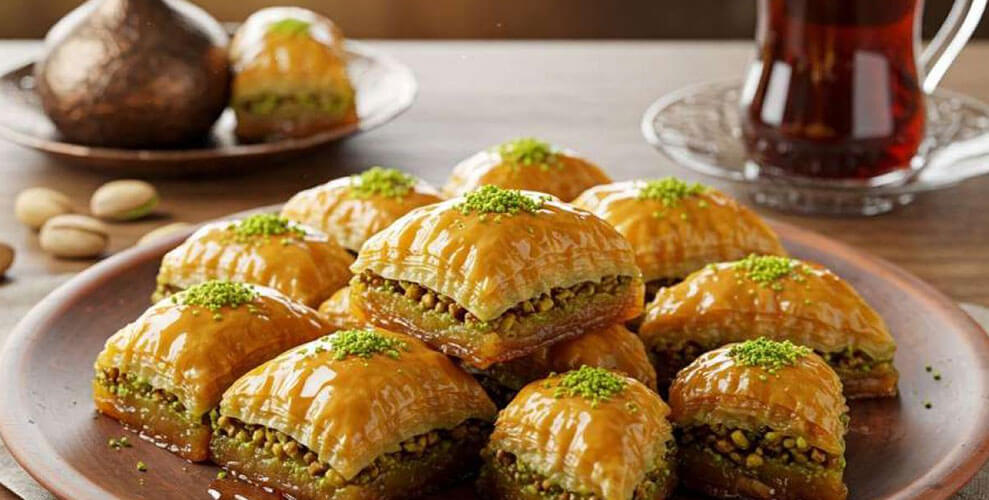
What Makes Baklava Truly Authentic?
Baklava is more than just a dessert; it is a culinary legacy shaped by centuries of craftsmanship, regional influence, and patience. When people speak of an authentic baklava experience, they are referring to a balance of delicate layers, rich nuts, fragrant syrup, and technique passed down through generations. Authenticity in baklava is not defined by luxury alone, but by adherence to traditional methods that respect texture, flavor harmony, and ingredient quality.
An authentic version does not overwhelm the palate with excessive sweetness or heaviness. Instead, it delivers contrast: crisp pastry against tender nuts, buttery richness against light syrup, and subtle aromatics that enhance rather than dominate. Every bite should feel structured, light, and indulgent without being too heavy on the gut.
What Is Authentic Baklava Made Of?
At its core, baklava relies on a small set of simple yet precise components:
1. Phyllo Dough (Filó Pastry)
Ultra-thin sheets of dough create baklava’s iconic layered structure. Traditional preparation involves brushing each sheet lightly with butter. This layering technique is what produces the flaky, crisp texture that distinguishes authentic baklava from dense imitations.
2. Butter or Ghee
Butter provides richness and helps separate the phyllo layers during baking. Clarified butter or high-quality ghee is often preferred in traditional kitchens for its clean flavor and higher smoke point.
3. Nuts
Pistachios, walnuts, or almonds are the most common fillings. The nuts are typically finely chopped, never ground into paste. Texture is crucial; the filling should offer gentle resistance rather than softness.
4. Syrup (Sharbat)
A mixture of sugar, water, and aromatics like lemon juice, rosewater, or orange blossom water. The syrup must be poured at the correct temperature to preserve crispness.
5. Aromatics & Spices
Cinnamon, cardamom, or clove may be used subtly depending on regional style.
The magic lies not in complexity but in proportion. Too much butter makes the dessert greasy; too much syrup causes sogginess; too many nuts create heaviness.
Baklava Ingredients: Quality Over Quantity
Authentic baklava demands exceptional ingredient quality. Because the recipe is minimal, flaws become obvious.
- Fresh nuts ensure flavor depth and natural oils.
- Pure butter avoids artificial aftertastes.
- Proper phyllo guarantees crisp layers.
- Balanced syrup prevents excessive sweetness.
Shortcuts such as margarine, stale nuts, or overly thick dough compromise both taste and texture. Traditional baklava celebrates restraint and precision rather than embellishment.
The Origin of Baklava: A Dessert with Deep Roots
The baklava origin is widely debated, reflecting its cultural significance across regions. Historians often trace its refined layered form to the kitchens of the Ottoman Empire, where pastry techniques evolved into sophisticated desserts served in royal courts. Earlier influences from Central Asian Turkic pastries and Middle Eastern nut-filled sweets likely contributed to its development.
Over centuries, baklava spread across Greece, Turkey, the Levant, and beyond, with each region adapting ingredients and syrup profiles. Despite variations, the fundamental identity remained constant: layered pastry, nuts, and syrup.
Greek Baklava vs Regional Variations
Greek baklava is one of the most recognized styles globally. It typically features walnuts, cinnamon, and honey-based syrup. The flavor profile leans warm and aromatic, with spices playing a prominent role.
Other regional interpretations include:
- Pistachio-focused versions known for vibrant color and buttery nuttiness
- Walnut-heavy styles delivering earthier depth
- Rose or orange blossom syrup variations, adding floral brightness
Authenticity does not belong to a single country; rather, it resides in respecting traditional preparation methods specific to each heritage.
The Craftsmanship Behind Authentic Baklava
Making authentic baklava is an exercise in patience. Each sheet of phyllo must be handled gently to prevent tearing. Butter must be applied evenly but sparingly. Nuts must be distributed consistently. Cuts must be precise before baking.
Baking itself requires attention. Too little heat results in pale, soft layers. Too much heat burns the top before the inner layers crisp. The golden-brown finish signals success.
The syrup stage is equally delicate. Hot syrup over hot baklava ruins the texture. Cold syrup over cold pastry prevents absorption. One element must be warm while the other cool, ensuring perfect balance.
Texture: The Hallmark of Authenticity
Texture defines the authentic experience:
- Top layers: Crisp and flaky
- Middle: Structured with buttery separation
- Filling: Nutty with a gentle bite
- Base: Firm, never soggy
Inferior baklava often collapses into softness or greasiness. Authentic baklava maintains architectural integrity even after syrup absorption.
Flavor Balance: Sweetness Without Excess
Authentic baklava is sweet, but not overwhelmingly so. The syrup enhances rather than saturates. Butter adds richness without heaviness. Nuts provide depth that anchors sweetness.
True craftsmanship results in complexity:
- Nutty warmth
- Buttery smoothness
- Light citrus brightness
- Subtle floral notes (if used)
Each element complements the others.
Why Authentic Baklava Feels Different
Those who have tasted genuine baklava often describe it as lighter, crisper, and more refined than commercial versions. This difference arises from:
- Traditional layering techniques
- Proper syrup application
- Fresh ingredients
- Controlled sweetness
- Handcrafted precision
Authentic baklava does not feel sticky or overly dense. Instead, it melts delicately while retaining crunch.
Preserving Tradition in a Modern World
Modern bakeries sometimes introduce chocolate, caramel, or fusion flavors. While creative adaptations can be enjoyable, the authentic baklava experience remains rooted in simplicity and heritage.
Preserving tradition means valuing:
- Time-honored recipes
- Skilled preparation
- Ingredient integrity
- Cultural respect
Authentic baklava represents continuity; a dessert connecting generations through shared taste and technique.
The Enduring Appeal of Authentic Baklava
Baklava’s longevity is no accident. Its combination of crisp pastry, rich nuts, and fragrant syrup delivers sensory satisfaction unmatched by many desserts. When prepared authentically, baklava offers elegance, balance, and nostalgia.
Authenticity also shapes the emotional connection people have with this dessert. A well-made piece carries the memory of careful layering, patient baking, and recipes refined over generations. The experience becomes more than sweetness; it reflects heritage, skill, and the quiet discipline required to perfect texture and flavor. In a world of fast, mass-produced treats, traditional baklava stands apart through its attention to detail and timeless preparation.
Served at celebrations, presented as a thoughtful gift, or paired with tea, authentic baklava remains a symbol of hospitality, craftsmanship, and refined indulgence.
The Enduring Appeal of Authentic Baklava
Baklava’s longevity is no accident. Its combination of crisp pastry, rich nuts, and fragrant syrup delivers sensory satisfaction unmatched by many desserts. When prepared authentically, baklava offers elegance, balance, and nostalgia.
Whether served during celebrations, gifted to loved ones, or enjoyed with tea, authentic baklava continues to symbolize hospitality, craftsmanship, and indulgence done right.