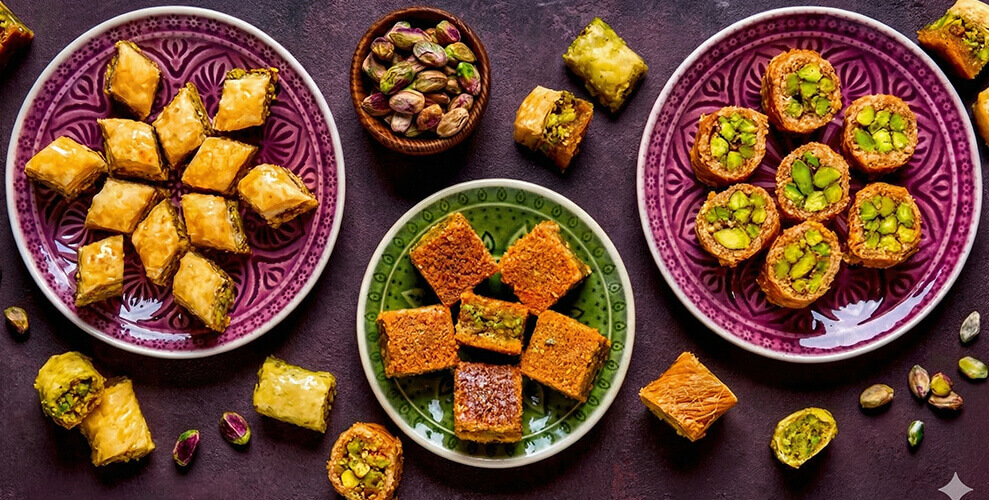
Arabic sweets have a rich history and are celebrated worldwide for their delicate textures, aromatic flavors, and unique combinations of nuts, syrup, and spices. If you’ve ever wanted to explore Arabic sweets names, this guide will introduce you to the most popular desserts from the Middle East. Ordering from a bakery in Karachi or exploring these desserts for the first time, learning the names and unique qualities of each sweet enhances your enjoyment. Ranging from crisp, syrup-soaked pastries to creamy, nut-filled treats, Middle Eastern sweets offer a rich variety of flavors and textures. Some highlight pistachios for their flavor and visual appeal, while others focus on rich cheeses, semolina, or dates. This article will help you navigate through the wide world of Arabic desserts and understand their unique qualities.
Baklava
Baklava is arguably the most famous of all Arabic desserts. This layered pastry is made from thin sheets of phyllo dough, butter, and a rich baklava filling of nuts like pistachios or walnuts, all soaked in a fragrant sugar syrup. When exploring Arabic sweets names, baklava often comes to mind first. Its crisp layers and sweet, nutty filling make it perfect for gifting or serving at celebrations. For the best experience, always order fresh Arabic dessert baklava to enjoy its signature crunch and aroma.
Baklava can come in multiple variations, including plain, rolled, or diamond-shaped pieces. Some bakeries add hints of cardamom or rosewater in the syrup, enhancing the flavor profile and making each bite even more indulgent. Pistachio baklava, in particular, is highly sought after for its vibrant green filling and subtle nutty sweetness.
Kunafa
Kunafa, also spelled Knafeh, is a classic Arabic sweet dish kunafa. Made with shredded phyllo dough or semolina, it is layered with cheese, cream, or sometimes nuts, and soaked in sugar syrup. Kunafa is best served warm and is particularly popular during Ramadan and other festive occasions. The creamy cheese or rich cream filling balances the sweetness of the syrup and the crispiness of the top layers, making it one of the most indulgent Middle Eastern sweets.
Pistachios are often sprinkled on top of kunafa for added flavor and visual appeal. The vibrant green topping not only enhances taste but also adds a beautiful contrast to the golden baked pastry. Kunafa is also versatile; some recipes use a combination of cheese and semolina dough to create unique textures that cater to diverse tastes.
Maamoul
Maamoul are small, delicate pastries made from semolina or flour dough and filled with dates, pistachios, or walnuts. These buttery treats are traditionally enjoyed during Eid and other holidays. Their crumbly texture and flavorful fillings make them a standout in the list of Arabic sweets names. Maamoul is often shaped using molds or by hand, and the intricate patterns on top add to their visual charm.
These treats can be baked or lightly fried, depending on the recipe, and are commonly served with Arabic coffee or tea. Their portability and long shelf life make maamoul perfect for gifting or sharing during festive occasions.
Basbousa
Basbousa, also known as Hareeseh, is a sweet semolina cake soaked in syrup. Often garnished with almonds or pistachios, it has a moist texture and a mild, pleasant sweetness. Basbousa is a must-try when exploring Arabic sweets names, especially for those who enjoy subtler desserts. It is commonly served at family gatherings, weddings, and celebrations.
The simplicity of basbousa makes it versatile; some versions incorporate coconut or cream for a richer flavor. Its soft, syrupy texture provides a delightful contrast to crispier pastries like baklava.
Halva
Halva is a dense, sweet confection primarily made from tahini (sesame paste) and sugar. It comes in various flavors, including pistachio, chocolate, and vanilla. Halva is popular across the Middle East and is considered a classic Middle Eastern sweet. Its melt-in-the-mouth texture and nutty flavor make it a staple for those who appreciate desserts with depth and richness.
Pistachio halva, in particular, is often served during celebrations or as a gift. The combination of sesame and pistachios provides both flavor and a visually appealing green accent, making it a favorite among Arabic sweets with pistachios.
Qatayef
Qatayef are stuffed pancakes traditionally prepared during Ramadan. These small pancakes are filled with nuts, sweet cheese, or cream, folded, and fried or baked before being soaked in syrup. Qatayef provides a combination of crispy exterior and soft, sweet filling, making it one of the most loved Arabic sweets names.
Pistachios are commonly used in the filling to add a crunchy texture and nutty aroma. Qatayef can be served hot or at room temperature, making it versatile for different occasions. Its preparation is often a family activity during festive seasons, further adding to its cultural significance.
Atayef Asafiri
A variation of Qatayef, Atayef Asafiri are small, delicate pancakes filled with sweet cheese or cream and garnished with pistachios. Typically served chilled, these sweets are popular at weddings and celebrations. Including Atayef Asafiri in your knowledge of Arabic sweets names helps you recognize this elegant dessert on menus and bakery displays.
The small size of Atayef Asafiri makes it perfect for individual servings or dessert platters. Its creamy filling contrasts with the crisp edges, creating a refined bite that dessert enthusiasts adore.
Halawet El Jibn
Halawet El Jibn is a Lebanese dessert made of semolina dough filled with sweet cheese, rolled, and topped with sugar syrup and pistachios. Its soft and chewy texture, combined with the rich flavor of the cheese and the nutty crunch of pistachios, makes it one of the standout Arabic sweets with pistachios. This dessert is particularly popular in Lebanese cuisine and often featured in Middle Eastern dessert assortments.
Other Popular Arabic Sweets
Some additional Middle Eastern sweets that are widely enjoyed include Zalabia (deep-fried dough soaked in syrup), Knafeh Nabulsieh (a variation of kunafa with thick cheese layers), Ghraybeh (simple buttery cookies often garnished with almonds or pistachios), and Barazek (crunchy sesame and pistachio cookies). Each of these desserts adds to the richness of Arabic cuisine and demonstrates the variety of textures, flavors, and ingredients used in traditional sweets.
Tips for Ordering and Enjoying Arabic Sweets
When ordering Arabic dessert baklava, kunafa, or other Middle Eastern sweets, freshness is key. Most syrup-based pastries are best enjoyed within a few days to maintain their crispiness and flavor. Nuts like pistachios and walnuts should always be fresh to retain their aroma and crunch.
Presentation is equally important. Garnishing desserts with pistachios, almonds, or a drizzle of syrup enhances both flavor and visual appeal. Many Arabic sweets are best paired with tea or coffee to balance the sweetness and highlight their textures. Understanding these details ensures a delightful experience when indulging in Middle Eastern sweets.
Final Thoughts: Arabic Sweets Names
Exploring Arabic sweets names introduces you to a world of rich flavors, textures, and traditions. From Arabic dessert baklava to Arabic sweet dish kunafa and Arabic sweets with pistachios, each treat highlights the artistry and tradition of Middle Eastern desserts. Familiarity with these popular sweets makes choosing desserts from a bakery or preparing them at home easier and more enjoyable. Perfect for gifting, special occasions, or a personal treat, Arabic sweets consistently deliver elegance, flavor, and a memorable culinary experience.